In Florida, hurricane season shapes every roofing decision. You may love the warm texture of wood shake or the clean lines of natural slate, but you also need a roof that stays put when the wind picks up.
So do these roofs hold up in a storm? A well-engineered, properly installed system can perform very well, but the look of the panel is not what protects your home. The complete roof assembly is. This guide explains what makes a hurricane resistant metal roof in Florida, what wind ratings and approvals mean, and what to ask before you sign a contract.
Why Metal Is Often Considered the Best Roof for Hurricane-Prone Areas
When homeowners search for the best roof for hurricane prone areas, metal comes up again and again. Metal panels are large pieces fastened across the roof deck, which means fewer small, loose components than individual shingles, tiles or wood shakes. In high winds, those smaller pieces can lift and become flying debris.
Metal is also typically lighter than natural slate or concrete tile, which can mean less load on the structure. Your roof framing should still be reviewed before any roof change. If you’re still weighing the material itself, our article on why metal roofing is a smart, durable and cost-effective choice in Florida covers the bigger picture.
One honest note: no roof is hurricane-proof. Extreme winds, flying debris and poor installation can damage any roofing material. The goal is a roof that is engineered, approved and installed to perform as well as possible.
Metal Roof Wind Resistance: What the Ratings Mean
During a hurricane, wind flowing over your home creates suction that tries to pull the roof upward. This is called wind uplift, and it is why metal roof wind resistance depends on testing and attachment, not only on the metal itself.
- Ratings apply to the whole assembly. A rating describes how a specific combination of deck, underlayment, panels and fasteners performed in testing, not just the panel on its own.
- Florida requires product approval. Roofing products used in the state must meet Florida’s product approval requirements.
- Miami-Dade and Broward are stricter. Both counties sit in the High-Velocity Hurricane Zone (HVHZ), where products must meet additional testing and approval requirements.
Don’t settle for a general statement like “it’s wind rated.” Ask for the documentation and confirm it matches the product, profile and installation method in your proposal.
It’s the Whole System, Not Just the Panels
Most storm failures begin at the edges and connections, not in the middle of the roof. A strong panel on a weak assembly won’t protect you. These elements work together:
- Roof deck: It must be sound and properly fastened before anything goes on top.
- Underlayment: This is your backup layer of water protection if wind-driven rain gets in.
- Attachment: The fastening method, clips and spacing determine how well the roof resists uplift.
- Edge metal, ridges and hips: Wind tends to get underneath the roof here, so detailing matters a great deal.
- Flashing: Walls, valleys, chimneys and vents are common leak points in storms.
When you compare proposals, compare these details, not just price and color.
Shake-Look vs Slate-Look Metal: Does Style Affect Storm Performance?
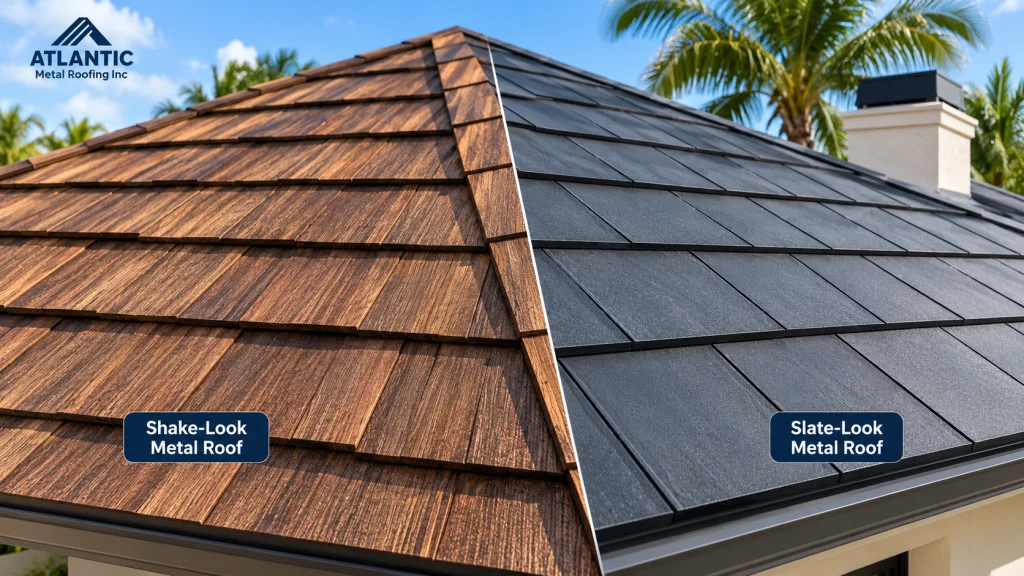
Shake and slate are style choices. A shake-look metal roof has a textured surface with deeper shadow lines, while a slate profile is flatter and crisper. Storm performance depends on the specific product, how its panels are attached, whether it carries the right approvals for your county, and the quality of installation.
That means you shouldn’t assume every profile performs the same. If you’re exploring shake and slate metal roofing, ask for the testing and approval information for the exact product you’re considering, along with its impact resistance and wind-borne debris documentation, since both vary by product.
Homeowners who want a traditional look with metal’s strength often choose slate-look metal roofing in South Florida for exactly this reason: the classic appearance sits on top of a complete, engineered roof system.
Aluminum or Steel in a Coastal Hurricane Zone?
Corrosion matters for storm readiness because a weakened panel or fastener can fail sooner. Aluminum is commonly considered for oceanfront, bayfront and salt-air exposure thanks to its natural corrosion resistance. Coated steel can suit inland homes with lower salt exposure, where the finish protects the metal underneath.
Freshwater and saltwater create different conditions, so confirm that the metal, finish and warranty all fit your property’s location. Finish and color are part of that decision too, and our guide to the best metal roof colors for Florida homes explains how sun, salt air and your community’s rules affect the choice.
Metal Roof Wind Mitigation Inspection in Florida
A metal roof wind mitigation inspection in Florida documents the features of your home that help it resist wind. An inspector typically looks at items such as roof covering, roof deck attachment, roof shape, secondary water resistance, opening protection and roof-to-wall connections.
Many insurers use this report when setting windstorm premiums, so a new roof can matter for your coverage. But any discount depends on your insurer, your policy and the whole home, not only the roof. Don’t plan around a specific saving, and ask your insurance agent how your carrier treats a new metal roof.
Keep your permit, product approval documents, final inspection records and warranty paperwork together. Your roofer should help provide them.
Questions to Ask Before You Choose a Roofer
- Is the exact system approved for my county, including the HVHZ if I live in Miami-Dade or Broward?
- What wind uplift rating applies to the complete assembly?
- How are the panels attached, and at what spacing?
- What underlayment is included?
- How will edges, ridges, hips and penetrations be detailed?
- How do the workmanship and material warranties differ?
- Is the contractor licensed and insured? You can verify a Florida license on the state’s licensing website.
Frequently Asked Questions
Are metal roofs hurricane-proof?
No roof is hurricane-proof. A properly engineered and installed metal roof can be a strong choice, but performance depends on the product approval, attachment and quality of installation.
Is a metal roof better than a tile roof in a hurricane?
Metal is lighter and uses fewer loose pieces, which many homeowners value. Tile systems can also perform when engineered and installed to code, so compare the approved ratings of the specific systems rather than the material alone.
Will a metal roof lower my insurance?
It may help in a wind mitigation inspection, but discounts depend on your insurer and the entire home. Ask your agent before you plan around any savings.
Build a Roof That Looks Right and Holds Strong
A shake-look or slate-look metal roof can give you classic style and a storm-ready system, as long as the design, approvals and installation are done correctly. After any severe storm, have a professional inspect your roof rather than climbing up yourself.
Atlantic Metal Roofing installs steel and aluminum roofs across Miami-Dade, Broward, Palm Beach and the Naples area, backed by 30+ years of team experience. Call (305) 686-5555 to book a free on-site or FaceTime consultation. Florida licensed, CCC1337648.